Blog
Part 2. Why Did Harringtonine Attract So Much Attention? 🧬
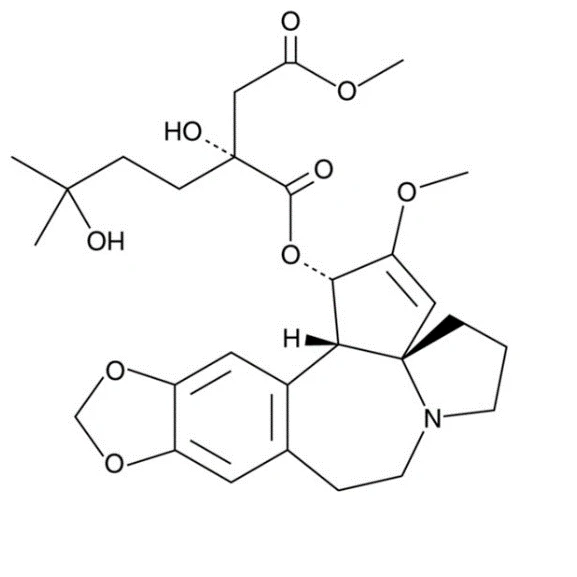
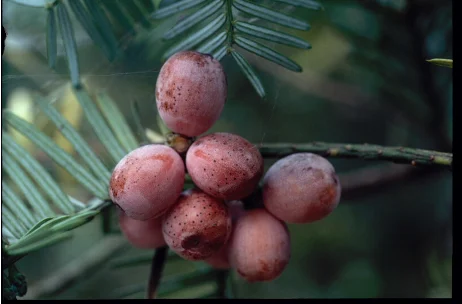
Plants in the genus Cephalotaxus have been used in traditional medicine for centuries. In modern research, however, much of the attention has centered on a natural compound called harringtonine.
In this article, we explore its traditional uses, the evolution of harringtonine research, and the challenges of securing enough plant material for large-scale studies and potential industrial applications.
From Traditional Medicine to Modern Natural Products Research
In China, the seeds of Cephalotaxus plants, known as zǔfēizǐ or sān jiān shān, have traditionally been used to help eliminate intestinal parasites and treat indigestion. Young branches and leaves, referred to as sān jiān shān zhī yè, were also reportedly used to treat malignant boils and tumors.
Modern research has built on this traditional knowledge, shifting the focus toward identifying specific compounds and scientifically investigating how they work.
At the center of this research is harringtonine, a naturally occurring alkaloid extracted from Cephalotaxus plants. It has been reported to inhibit protein synthesis, the process by which cells produce the proteins they need to function.
From Leukemia Research to a Potential COVID-19 Treatment
From the 1970s through the early 2000s, research on harringtonine focused primarily on its potential to suppress tumors and treat acute and chronic myeloid leukemia.
In the 2010s, interest expanded as researchers investigated its ability to interfere with protein synthesis processes involved in the replication of various viruses.
After 2020, harringtonine was also discussed as a potential candidate for COVID-19 treatment.
One distinction is important here: being studied as a potential treatment is not the same as being an established therapy. This article highlights the promise of harringtonine without suggesting that its effectiveness has been definitively established for every disease under investigation. Research findings and confirmed clinical applications must be considered separately.
A Valuable Compound, but a Challenging Source of Raw Material
According to the original article, research-grade harringtonine can cost around $350 for just 10 mg.
Initially, the compound was extracted mainly from seeds, including their fleshy outer coverings. But Cephalotaxus harringtonii can take 10 to 15 years to produce seeds, and its plants are dioecious, meaning male and female reproductive structures occur on separate plants. These factors make it difficult to obtain large quantities of seeds within a short period.
More recently, relatively high concentrations have also been found in vegetative tissues, including young leaves, roots, and stems. This has opened up new possibilities for research and potential industrial applications.
However, if the species or population from which the plant material was obtained is not clearly identified, comparisons between studies can become unreliable, making it harder to reproduce research findings.
Why Are Alkaloids Connected to Plant Taxonomy?
Alkaloids are a group of nitrogen-containing organic compounds. Morphine, caffeine, nicotine, cocaine, and quinine are all examples.
Such compounds are often restricted to particular plant lineages or species, although their distribution varies.
Other compounds, including saponins, phenolic compounds, organic acids, and sugars, occur across a much broader range of plants.
In plant taxonomy, researchers consider the predictive value of a compound: whether knowing a plant's evolutionary lineage can help predict which chemical compounds it may contain.
Harringtonine research, therefore, involves more than chemical analysis alone. It is also closely connected to the accurate identification and classification of the plants from which the compound is obtained.
| Harringtonine | A naturally occurring alkaloid found in Cephalotaxus plants that has attracted attention in anticancer and antiviral research. |
|---|---|
| Alkaloids | A group of nitrogen-containing organic compounds. Caffeine and nicotine are familiar examples. |
| Inhibition of protein synthesis | An action that interferes with the process cells use to produce the proteins they need. |
| Predictive value | A taxonomic concept describing how knowledge of a plant's lineage can help researchers anticipate the presence of certain compounds. |
| Vegetative tissues | Plant organs involved in growth, such as leaves, stems, and roots, rather than flowers or seeds. |
Harringtonine is a compelling example of why Cephalotaxus plants hold an important place in medicinal plant research.
At the same time, it reminds us that in natural products research, knowing what has been extracted is only part of the story. Knowing which plant it came from is just as important.
That question leads us to the subject of Part 3: the taxonomic debate surrounding Cephalotaxus in East Asia.
 PhytoRevolution Blog Coming Soon
A space for deeper, more professional stories on plant
research and active ingredients